
Climate Change
Climate change is a significant and sustained alteration of the Earth's climate patterns, largely caused by human activities that increase the concentration of greenhouse gases (GHGs) such as carbon dioxide (CO2), methane (CH4), and nitrous oxide (N2O). This phenomenon drives global warming and causes environmental, social, and economic impacts worldwide.
Main causes:
- Fossil fuel combustion: Main source of GHG emissions in energy and transport.
- Deforestation: Reduces CO2 absorption and releases stored carbon.
- Intensive agriculture and livestock: High emissions of methane (CH4) and nitrous oxides (N2O).
- Transport use: Fossil fuel vehicles increase CO2 emissions.
Main consequences:
- Rising temperatures: More intense and frequent heatwaves.
- Extreme weather events: Droughts, floods, and stronger storms.
- Sea level rise: Coastal areas threatened by glacier melt.
- Loss of biodiversity: Changes in natural habitats of many species.
- Health impacts: More vector-borne diseases and risks from extreme heat.
What can we do?
- Reduce emissions: Choose renewable energy and improve energy efficiency.
- Protect and restore forests: Increase natural carbon sinks.
- Promote sustainable mobility: Public transport, bicycles, and electric vehicles.
- Change consumption habits: Choose sustainable products and reduce waste.
- Support climate policies: Participate in and support climate initiatives.
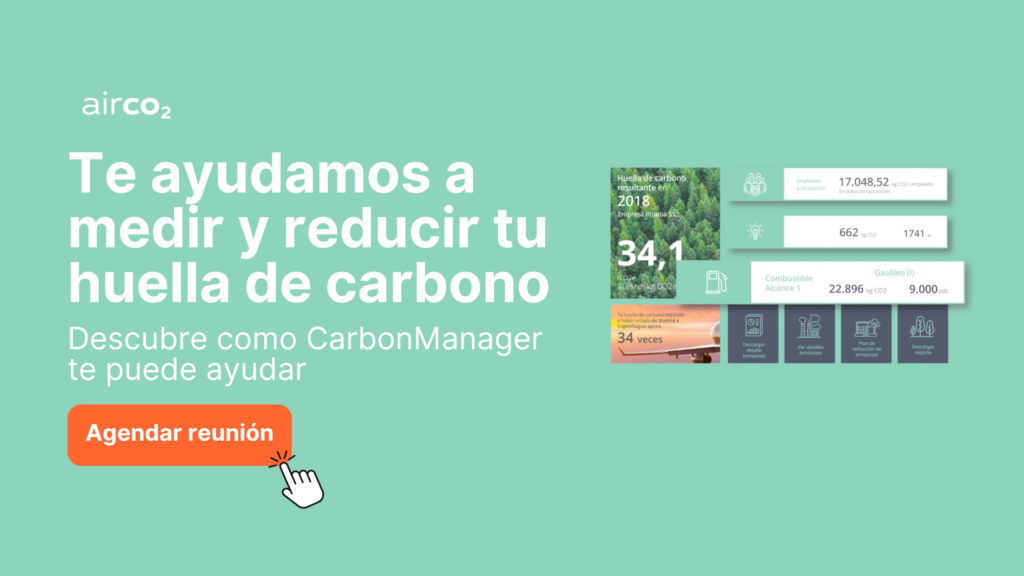
Do you want to know the impact of your activities and how to reduce it?
At airCO2 we help you measure your carbon footprint and design a personalized action plan to contribute to a more sustainable future.